
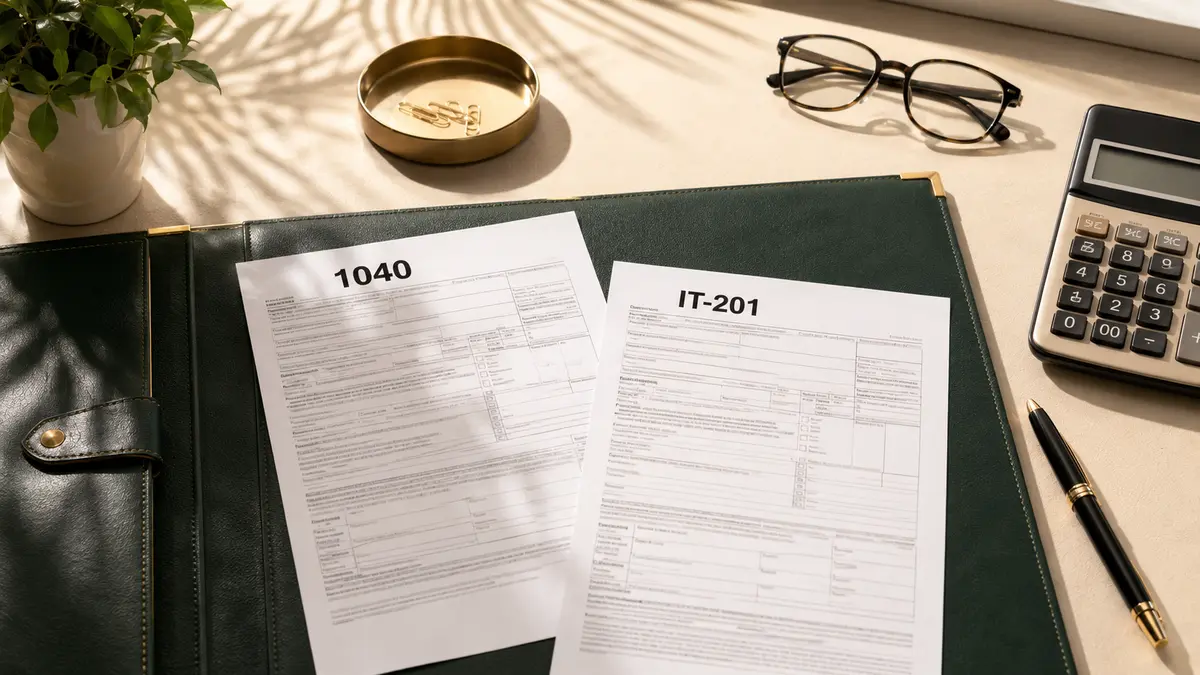
Filing a federal and state income tax return can become confusing when more than one state is involved. This is especially true for taxpayers who live part of the year in New York and part of the year in Florida, recently moved to Naples, own property in another state, or continue to receive New York-source income.
Form 1040 and IT-201 serve different purposes, but some taxpayers may need to file both. Understanding which forms apply to your situation can help you avoid processing delays, tax notices, missed deductions, interest, and unnecessary penalties.
This guide explains what each form is used for, who may need to file it, which documents to prepare, and when Form IT-203 may apply instead of IT-201.
What Is Form 1040?
Form 1040 is the federal individual income tax return used by U.S. taxpayers to report annual income, deductions, credits, taxes already paid, and either a refund or remaining balance.
Depending on your financial situation, Form 1040 may also include additional schedules for:
- Self-employment or freelance income
- Rental property income
- Investment gains and losses
- Retirement distributions
- Itemized deductions
- Additional taxes
- Tax credits
- Estimated tax payments
The correct schedules depend on the type of income and deductions reported. For example, a self-employed taxpayer may need Schedule C and Schedule SE, while someone with rental property may need Schedule E.
The IRS provides the current version and instructions on its official Form 1040 information page.
What Is New York Form IT-201?
Form IT-201 is the New York State Resident Income Tax Return. It is generally used by taxpayers who were full-year residents of New York during the applicable tax year.
The return begins with information reported on the federal Form 1040 but includes New York-specific additions, subtractions, deductions, credits, and state tax calculations. Additional sections may apply to residents of New York City or Yonkers.
A taxpayer may need to file both Form 1040 and IT-201 because Form 1040 handles the federal return, while IT-201 handles the New York resident return.
IT-201 vs. IT-203: Choosing the Correct New York Return
One of the most common sources of confusion is assuming that every taxpayer with a connection to New York should file Form IT-201.
That is not always correct.
| Taxpayer situation | New York form that may apply |
|---|---|
| Full-year New York State resident | Form IT-201 |
| Moved into or out of New York during the year | Form IT-203 |
| Florida resident with New York-source income | Form IT-203 may apply |
| No New York residency or New York-source income | A New York return may not be required |
Form IT-203 is generally used by New York nonresidents and part-year residents who meet the state filing requirements.
Residency is not always determined only by the address on a driver’s license. Domicile, time spent in each state, property, business activity, and personal ties may all become relevant. Taxpayers who divide their time between New York and Florida should carefully document their residency and travel dates.
Who May Need to File Both Form 1040 and IT-201?
You may need to file both returns when you are required to file a federal individual income tax return and were also a full-year resident of New York.
Examples may include:
- An individual who lived in New York throughout the year
- A New York resident who spent the winter in Naples but did not change domicile
- A taxpayer who owns a second home in Florida but remains a New York resident
- A married couple filing jointly when both spouses are New York residents
- A New York resident with wages, investments, retirement income, rental income, or self-employment income
If you moved permanently from New York to Florida during the tax year, IT-203 may be the appropriate state return instead. The date of the move and the facts supporting the change of residency should be documented carefully.
For a broader overview of state obligations after relocating, read our guide to taxes in Florida.
Documents Needed for Accurate Preparation
Preparing your documents before beginning the return can prevent omissions and reduce unnecessary delays. Depending on your situation, you may need:
- Social Security numbers and personal identification information
- A copy of the previous year’s federal and state returns
- Forms W-2 from employers
- Forms 1099 for contract work, interest, dividends, or retirement income
- Brokerage and investment statements
- Social Security benefit statements
- Business income and expense records
- Rental property income and expenses
- Mortgage interest statements
- Records of charitable contributions
- Childcare and education expense documents
- Health insurance and medical expense records
- Estimated tax payment confirmations
- Federal and state tax withholding records
- Documents supporting a move or change of residency
Our guide on how to organize your tax documents provides a practical checklist for preparing before tax season.
Common Form 1040 and IT-201 Filing Mistakes
Using the Wrong New York Form
Someone who moved from New York to Florida may incorrectly file IT-201 as a full-year resident. In other situations, a taxpayer may file as a nonresident even though New York still considers that person a resident.
The correct residency classification should be determined before preparing the state return.
Leaving Out Income
Income reported on W-2s, 1099s, investment statements, rental records, or business records should be reviewed carefully. Information submitted to the IRS or state tax authorities should generally match the information included on the return.
Missing income can result in notices, additional tax, interest, or processing delays.
Creating Differences Between the Federal and State Returns
The New York return uses information from the federal return as its starting point. An incorrect figure on Form 1040 may therefore affect IT-201 as well.
The returns should be reviewed together rather than prepared as unrelated documents.
Missing State Adjustments and Credits
Federal and New York tax rules are not identical. A deduction or adjustment allowed on the federal return may receive different treatment on the state return.
Taxpayers may also overlook New York credits for which they qualify when they rely only on federal tax information.
Assuming an Extension Also Extends the Payment Deadline
An extension provides additional time to file the federal return, but it generally does not provide additional time to pay the tax owed.
For 2025 federal returns filed during 2026, most taxpayers had an April 15, 2026 filing and payment deadline. Taxpayers who requested a valid federal extension generally have until October 15, 2026 to file, but unpaid tax may still be subject to interest and possible penalties from the original deadline.
Current extension information is available through the IRS extension guidance.
Why Accurate and Timely Filing Matters
An accurately prepared return can help:
- Reduce the likelihood of processing delays
- Prevent avoidable IRS or state notices
- Ensure income is reported consistently
- Identify eligible deductions and credits
- Calculate the correct refund or balance due
- Avoid late-filing and late-payment penalties
- Maintain reliable financial records for future use
Accuracy is particularly important for taxpayers with self-employment income, investment activity, rental properties, multi-state income, or a recent change of residency.
Businesses and individuals with obligations in more than one jurisdiction may also benefit from understanding broader state and local tax requirements.
When Should You Work With a Tax Professional?
Professional assistance may be helpful when:
- You moved between New York and Florida
- You are unsure whether IT-201 or IT-203 applies
- You receive income from more than one state
- You own a business or rental property
- You have investment or retirement income
- You received an IRS or New York tax notice
- You need to correct a previously filed return
- Your federal and state returns contain different adjustments
A tax professional can review the complete situation before determining which forms and schedules may be required.
Naples Taxes provides personalized tax preparation support for individuals and businesses. To discuss your filing needs, contact Naples Taxes or call 239-431-5755.